

Full Coverage Auto Insurance
Answering 4 questions about full coverage auto insurance: What it is – What it’s not – How to use it – and Do you really need it?
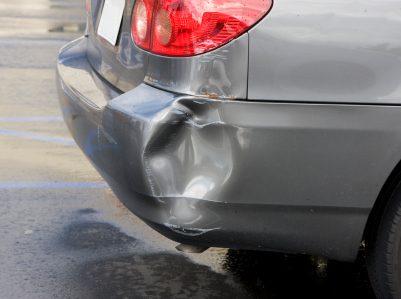
If you backed into something, would it be covered by comprehensive or collision?
A lot of people throw around the term full coverage auto insurance. A friend, a family member, or even your insurance agent may have said it before. Technically-speaking, full coverage auto insurance doesn’t exist. But it’s important to know what it means to most people.
One of my insurance trainers drilled into my head “there’s no such thing as full coverage auto insurance – there’s no such thing as full coverage auto insurance”. Still, consumers everywhere use the term “full coverage auto insurance”. So my purpose is to help you understand what full coverage auto insurance really is, what it’s not, what it does, and whether you need it.
Question #1: What is Full Coverage Auto Insurance?
Full coverage auto insurance refers to your auto policy when it has both liability coverage and physical damage coverage. Physical damage coverage is usually referred to as comprehensive (comp) and collision.
Collision covers the physical damage to your vehicle in an at-fault accident. That means, if you run a red light and cause an accident, collision covers the busted headlight on your car – minus your deductible.
Comprehensive (comp) covers physical damage to your car from acts of God and other such incidents. If you’re using comprehensive coverage, the damage to your vehicle cannot be your fault. For instance, if you’re driving down the road and a rock hits your windshield causing a crack, your comprehensive would cover the loss – minus your deductible.
Question#2: Why Isn’t It Really “Full Coverage Auto Insurance”?
As you can probably tell, it’s not exactly ‘full coverage auto insurance’. You still have to pay your deductible to use comp and collision. Sometimes your deductible is $50 and sometimes it’s $1000 – whatever it is, your ‘full coverage auto insurance’ won’t cover the deductible. You have to write the check for your deductible.
Also, you can’t intentionally wreck your car. In fact, there’s nothing that will cover that type of damage. So in case you’re standing at the edge of a cliff ready to send your old beater to its final resting place, you can back up now. There’s no auto insurance for intentional damage – maybe jail – but no coverage.
Question #3: How Do You Use Full Coverage Auto Insurance?
Hopefully you’ll never have to use your car insurance, but you might. If a tree ever falls on your car, or you sideswipe another car, then you want to notify your insurance company. This information is your proof of insurance in the glove box (you do keep a copy in your car, right?). Your insurer will help you through the process
Call them up and explain the physical damage situation to your vehicle. If another driver was not involved in the incident and you were not at fault, then it’s probably a comprehensive claim. If you were at-fault in the incident, then it’s probably a collision claim, Your auto insurance company will help you at that point. As always, claims are subject to policy guidelines.
Question #4: Do You Really Need a form of Full Coverage Auto Insurance?
That depends. Auto insurance companies usually recommend you carry comprehensive and collision coverage if you have a newer car. You might also consider getting full coverage if you can’t afford to replace the vehicle with cash. Finally, your bank requires you to maintain comp and collision on the policy if you’re financing the car. Banks like to be paid if you ever total your car.
If you have a later model vehicle, it may be time to drop your comp and collision. If you can handle the risk of a car worth a few thousand dollars, it could be worth it to drop full coverage to save some premium dollars.
Your insurance company should be able to guide you in such a case and advise you if having what everyone else calls “full coverage auto insurance” is in your best interest.
Tags: popular
Trackback from your site.
Reviews (3)
nancy johnson
| #
im wondering the book value on my 2000 plymouth breeze, i have full coverage on it and i want to know what its worth and then if i should keep the full coverage on it?
Reply
Michele Wilmonen
| #
To find the book value of your vehicle look it up in something like Kelly Blue Book or any other vehicle valuation tool. If you feel that you can pay for any damages that may happen to your vehicle or you can cover the amount the vehicle is worth if it is totaled in a car accident, then there is no reason to keep comprehensive or collision damage coverage on the vehicle.
Those two coverages are there to protect you financially if you are not able to pay for any damage done to your car or if you completely lose your vehicle.
Before you decide to remove these coverage though, talk to your insurance agent.
Reply
When To Drop Full Coverage Insurance | Car Insurance Guidebook
| #
[…] Both collision and comprehensive make up “full coverage”. Check out our article on Full Coverage Auto Insurance for more […]
Reply